Electronics, high and low voltage
In ceramic applications, the electronics industry, a major consumer of energy dissipators, finds materials that are perfectly suited to its needs.
Connectors for zirconia fibre optics have contributed greatly to the development of computer data transmission networks.
The manufacture of electrical insulators is one of the more classic applications of advanced ceramics because of the high electrical resistivity of certain ceramics.
These insulators are used under widely varying conditions, with voltages ranging from the microvolt to more than a million volts, and a range of frequencies extending from a few hertz to several gigahertz.
In the area of high voltage, consisting of electricity distribution and rail networks, aluminous porcelain and steatite provide insulation for overhead lines, as well as for equipment such as circuit breakers and transformers.
The quantities produced go from the single unit to several tens of millions of parts for each model.
Low-voltage devices, for example in home appliances, use cordierite. This ceramic is found mainly in the structures of resistors, rheostats, fuse plugs and bodies.
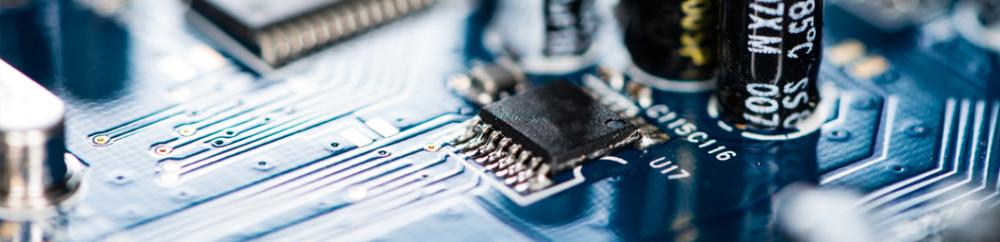
The insulating properties of ceramics are especially appreciated in electronics, where they are frequently used in the form of ceramic condensers, electronic circuit structures or for applications associated with electrical systems.
Applications in electronics also involve the manufacture of permanent magnets, the manufacture of sonars or ultrasound devices for the medical industry. More technical applications, like high-temperature superconductivity, are the subject of major research.
Piezoelectric ceramics utilize the unique properties of certain ceramics having an intrinsic reversible property linking the presence of electrical charges at the ends of a ceramic to a size variation.
These unique properties are used for:
- producing surface charge under mechanical stress (source of sparks to ignite gas)
- mechanical vibration at the frequency of an alternating field (sound generation or detection – sonar, buzzer, telephone). Ceramics have a quartz or lead-titanium-zirconate base.